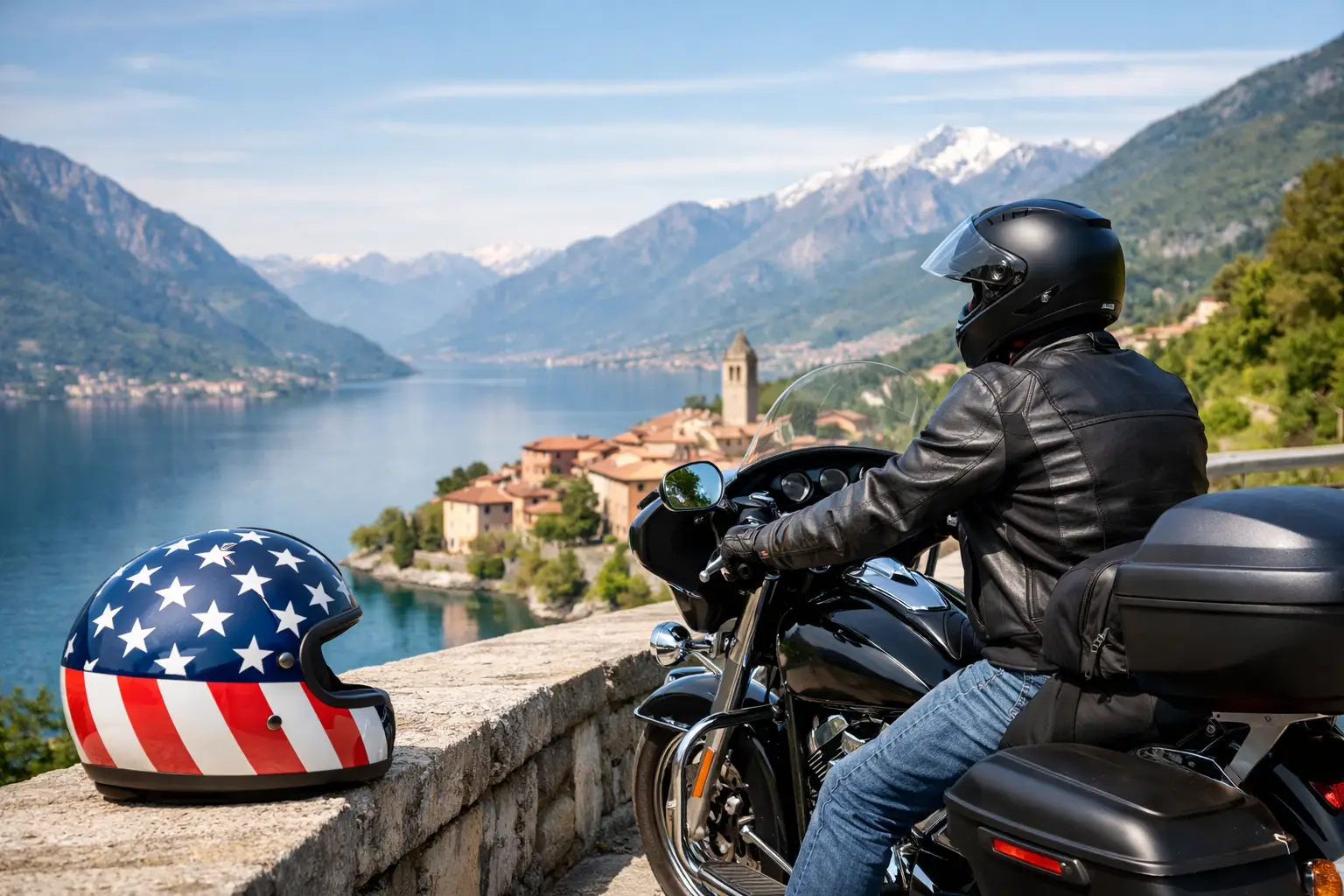

The best Italian coastal riding regions are not simply the places with the bluest water or the most famous postcard views. For a rider, the real magic lies in the road that reaches the coast: a ribbon of bends through olive groves, a village bar where helmets are welcomed beside the espresso machine, and a family-run hotel that understands the value of secure parking after a long day in the saddle.
Italy offers several very different coastal motorcycle experiences. Some are compact and technical, with constant switchbacks above the Mediterranean. Others invite a more relaxed rhythm, where white towns, seafood lunches, and warm evening rides matter as much as corner speed. The right region depends on how you like to ride, when you travel, and whether you want famous landmarks or the quieter Italy that begins a few turns beyond them.
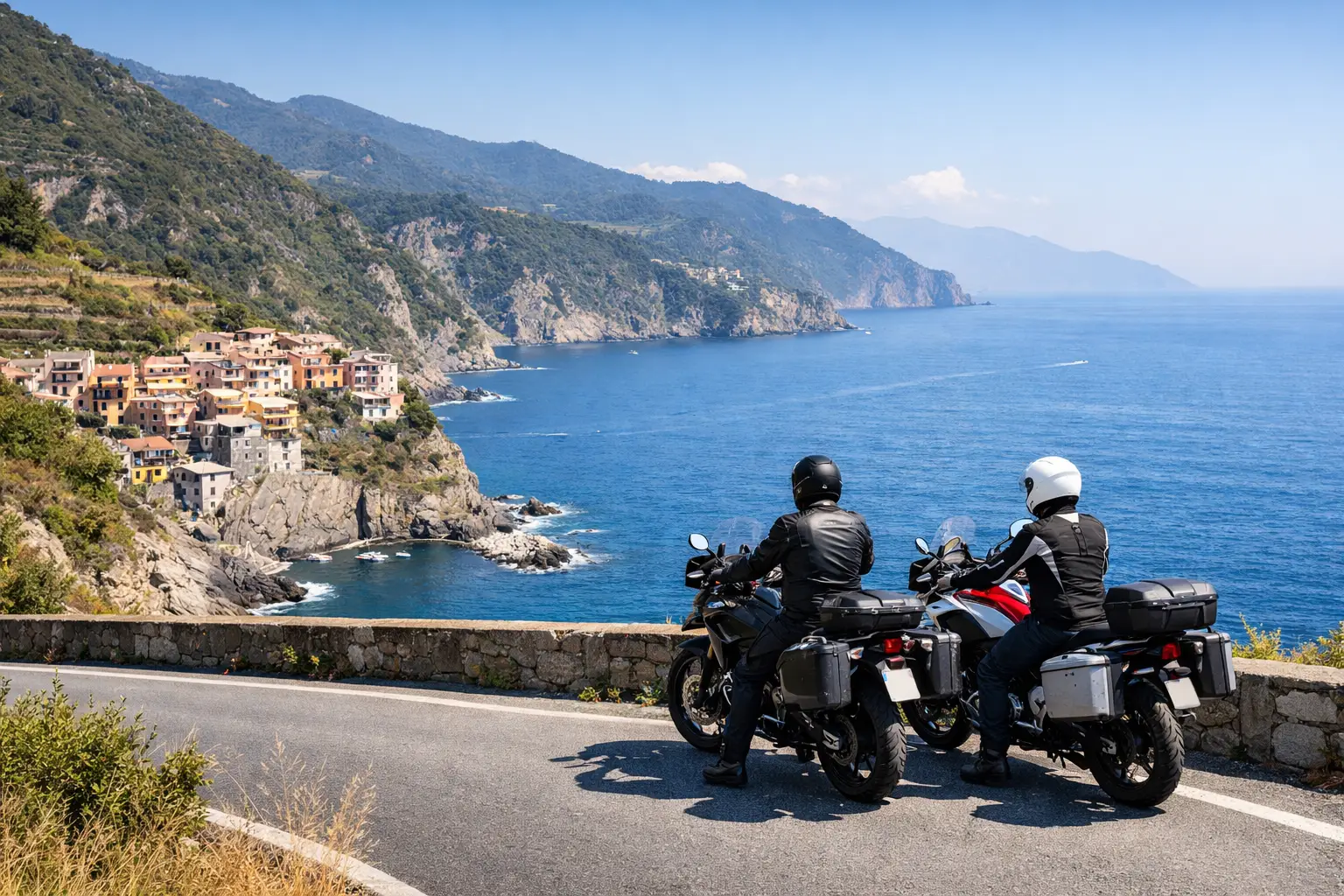
Liguria is Italy at its narrowest and most dramatic. The mountains rise immediately behind the coast, leaving little room for broad roads or anonymous development. That geography creates a superb riding landscape: tight curves, old stone villages, terraces of olive trees, and sudden openings to the blue Ligurian Sea.
The coastline between Genoa and the French border has the reputation, but the most satisfying days often begin inland. From the Riviera, roads climb into the Maritime Alps and thread through villages such as Pigna, Apricale, and Dolceacqua before returning toward the sea. The riding is engaging rather than fast. Expect narrow lanes, changing surfaces in older villages, and blind corners that demand respect.
Liguria suits riders who enjoy technical roads and do not need to cover huge distances to feel they have had a full day. It is especially rewarding in spring and early fall, when the weather is pleasant and the coastal towns are less crowded. July and August can be beautiful, but traffic, heat, and parking make the famous waterfront stretches less relaxing.
The trade-off is simple: this is not the region for long, flowing sweepers all day. It rewards patience, precise riding, and a willingness to stop often for focaccia, fresh fish, or a glass of local Vermentino.
When riders picture Tuscany, they often think first of vineyards, cypress roads, and hill towns. Yet its southern coast, especially Maremma, offers a different and wonderfully balanced version of the region. Here, the sea meets broad countryside, medieval villages, nature reserves, and quiet roads that feel made for a motorcycle.
From the Argentario peninsula, with its dramatic road above the water, you can ride inland through Grosseto’s open landscapes toward Pitigliano, Sorano, and Saturnia. These are roads with better visibility and a more relaxed flow than Liguria or the Amalfi Coast. The scenery changes quickly, from coastal pines and beaches to volcanic tufa towns and rolling farmland.
Maremma is one of the best choices for a first Italian motorcycle holiday because it feels generous. Roads are rarely rushed, towns are close enough for flexible planning, and the riding pairs naturally with long lunches and unhurried evenings. It also works well for couples or mixed groups, where not every traveler wants a full day of tight hairpins.
Choose Maremma if you want coastal scenery without making the coast the only event. A good route here lets you ride the shoreline in the morning, take lunch in a hill town, and finish at a small agriturismo where dinner is based on what was grown or caught nearby.
The Amalfi Coast is famous for a reason. The road clings to cliffs above the Tyrrhenian Sea, passing lemon groves, pastel villages, and views that stop even seasoned riders in their tracks. But its fame is also the reason it must be approached intelligently.
During peak summer, the Amalfi road can be crowded with cars, buses, scooters, and pedestrians. It is not a place to chase pace. Ride it early, ride it outside the busiest months, and enjoy it as a scenic experience rather than a sporting road. The reward is enormous when conditions are right, particularly in April, May, September, and October.
For many riders, the greater revelation is Cilento, south of Salerno. This is a larger, quieter coastal region where mountain roads descend toward fishing villages and long beaches. The roads around Castellabate, Acciaroli, Palinuro, and inland towns such as Roccadaspide provide the kind of variety that makes a multi-day motorcycle trip memorable. You can ride a twisting ridge in the morning and eat just-landed seafood by the water at night.
Amalfi and Cilento are best combined rather than treated as rivals. See the iconic coast, then leave the crowds behind and ride south into a landscape that still feels deeply local. That is where the Campania coast becomes a sublime trip rather than a checklist.
Puglia is different from Italy’s mountainous coastal regions. Its roads are generally less technical, its terrain is flatter, and its charm comes from rhythm rather than drama. This is riding for people who enjoy covering ground through a lived-in landscape of ancient olive trees, dry-stone walls, whitewashed towns, and small harbors.
The Gargano peninsula in northern Puglia offers the region’s most entertaining curves. Its forested interior and roads above the Adriatic provide a welcome surprise for riders who assume Puglia is entirely flat. Farther south, the Salento peninsula delivers an easygoing coastal route between Lecce, Otranto, Santa Maria di Leuca, and Gallipoli.
Puglia is a fine option for a custom trip, particularly if food, culture, and relaxed riding are equal priorities. Distances are manageable, the light is extraordinary, and each stop feels distinct. You might begin with a morning espresso in a Baroque city, ride the Adriatic coast, and end with grilled fish near a harbor as the evening passeggiata begins.
The compromise is that riders seeking endless alpine-style cornering may find parts of Salento too gentle. But for a warm-weather touring holiday with genuine Italian character, Puglia is hard to beat.
Sicily is one of the best Italian coastal riding regions because it gives you far more than a coast road. The island combines dramatic shorelines with mountains, volcanic landscapes, Greek ruins, Arab-Norman cities, and food that deserves its own itinerary. Every day can feel like a different country.
The northern coast between Palermo and Cefalù is spectacular, while the roads around the Madonie Mountains offer a thrilling inland contrast. In the east, Mount Etna provides high-altitude riding before the route drops toward Taormina, Catania, or the Ionian Sea. The southeast, around Noto, Modica, and Marzamemi, is gentler but rich in architecture and excellent food.
Sicily asks for time. Trying to circle the island in a few days means missing its best roads and arriving tired at places worth lingering in. A week is the minimum for a satisfying taste; ten days or more allows the route to breathe. Road quality can vary, and local traffic has its own confident style, so riders should arrive ready for an adventure rather than a perfectly polished touring circuit.
For those who do, Sicily delivers a rare sense of discovery. At CIMT, that is exactly the kind of riding we value: roads with character, meals with a story, and places that are still memorable after the engine has gone quiet.
If your priority is pure road enjoyment, Sardinia deserves a place near the top of the list. Its coastal roads are broad enough to flow, twisty enough to stay interesting, and often surprisingly quiet outside the busiest summer period. Granite cliffs, turquoise coves, cork forests, and empty interior valleys create a landscape that seems designed for two wheels.
The east coast, particularly between Dorgali, Baunei, and Arbatax, is among the island’s highlights. The road climbs and falls through rugged mountains, with views over the Gulf of Orosei that make frequent photo stops unavoidable. The Costa Smeralda is beautiful but can be busier and more polished, while the southwest offers a wilder, less visited feel.
Sardinia works beautifully for experienced riders who want day after day of high-quality roads without the congestion of mainland tourist corridors. The island’s limitation is logistics: getting there takes planning, whether by ferry or connecting flight and rental pickup. Once you are on the road, however, that effort makes sense very quickly.
For compact, technical Mediterranean riding, choose Liguria. For an easy balance of sea, countryside, and Tuscan food, make Maremma your base. For famous scenery and a more soulful southern extension, pair Amalfi with Cilento. Puglia favors relaxed touring, Sicily offers the broadest cultural adventure, and Sardinia is the strongest choice when the road itself is the main event.
The season matters as much as the map. Late April through June and September through October are usually the sweet spots for coastal Italy. You will find more comfortable temperatures, clearer roads, and a more natural connection with the towns you pass through. August is possible, but it asks for early starts, patience, and a willingness to avoid the most celebrated strips of coast.
The finest coastal ride is often not the road everyone has heard of. It is the one you find after breakfast, when the sea is still bright below you, the next village is just around the bend, and there is no reason at all to hurry.

Subscribe to our newsletter below and never miss the latest tour or an exclusive offer.