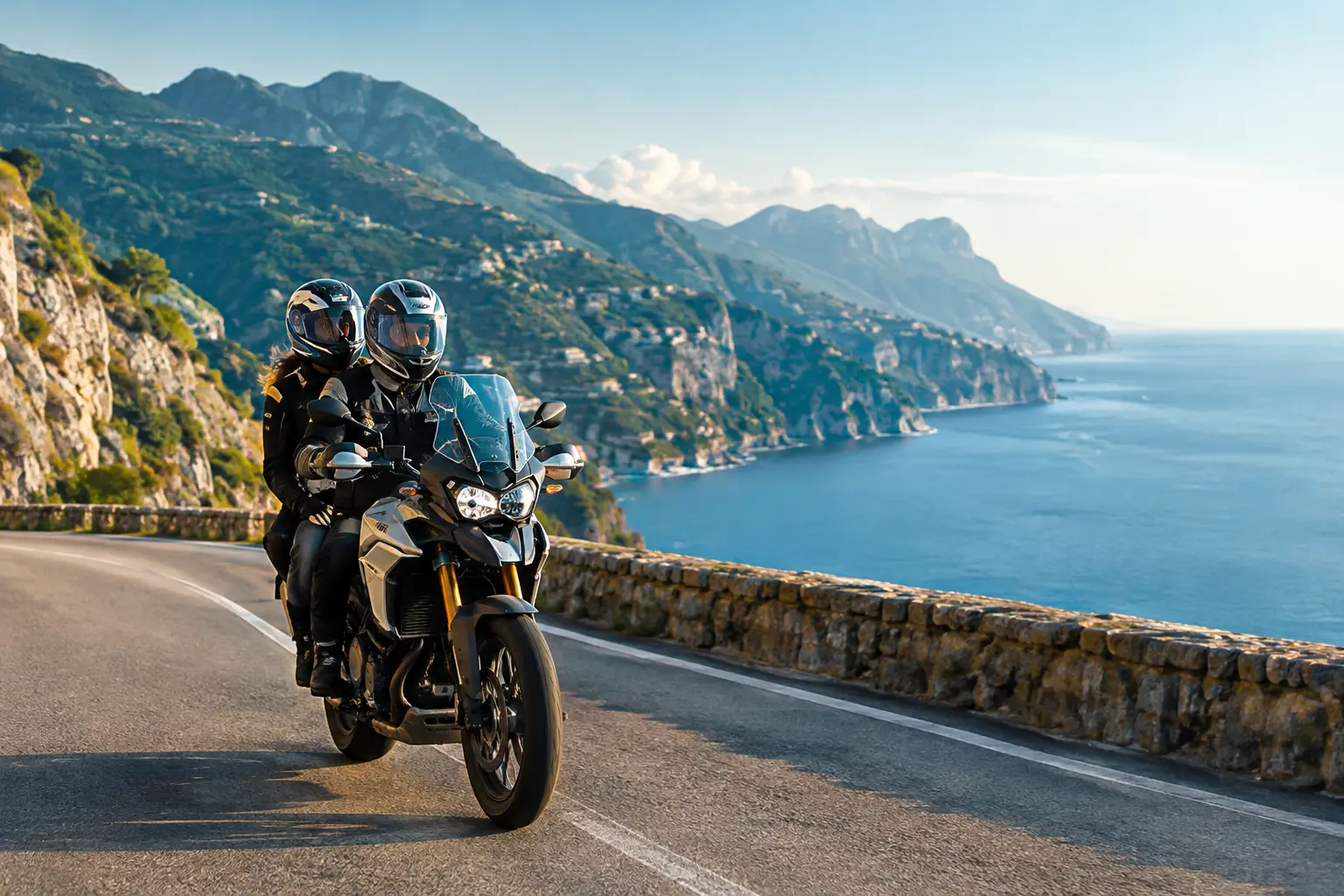

The wrong motorcycle can turn a glorious morning above Lake Garda into a tiring negotiation with hairpins, heat, and luggage. The right one makes Italy feel exactly as it should: an espresso in the piazza, a lightly packed bike outside the hotel, and a ribbon of traffic-light back roads leading toward the next hill town. If you are asking how to choose an Italian touring bike, start with the trip you want to ride, not the badge on the fuel tank.
Italy gives touring riders extraordinary variety in a relatively compact country. One week may include Alpine passes, Tuscan gravel lanes, Apennine curves, Amalfi traffic, and long coastal stretches in Puglia. No single motorcycle is perfect for all of it. The best choice is the machine that fits your experience, passenger plans, luggage, physical comfort, and the regions on your route.
First, look honestly at the roads. A motorcycle chosen for fast highway miles across the American West may feel oversized on a narrow lane outside Montepulciano or in the tight switchbacks of the Dolomites. Conversely, a light naked bike can be magical on a day ride but less relaxing after six hours with a passenger and full cases.
For a classic Italian touring holiday focused on paved secondary roads, a middleweight sport-tourer, adventure-tourer, or upright roadster is often the sweet spot. These bikes have enough power for mountain passes and highway transfers, while remaining manageable when the road narrows, the surface gets patched, or you need to make a slow U-turn outside a family-run trattoria.
A large luxury touring motorcycle is a fine choice when comfort for two is the clear priority and your itinerary includes longer connecting days. It offers excellent wind protection, generous luggage capacity, and a broad seat. The trade-off is weight. Italy rewards smooth, confident low-speed handling far more often than brute horsepower, especially in historic centers and steep hotel driveways.
Adventure-style motorcycles are especially versatile for riders who want an upright view, forgiving suspension, and the option to explore occasional unpaved access roads. They are not only for off-road travel. On imperfect pavement in the Apennines or rural Sicily, their suspension travel and relaxed ergonomics can make a long day remarkably comfortable. Choose one with a seat height you can handle confidently when loaded.
A touring motorcycle should disappear beneath you. Before committing, consider seat height, reach to the handlebars, knee angle, and the bike’s balance at walking pace. A machine that feels impressive in a showroom can feel very different after an hour of tight corners, a hot afternoon, and a stop-start approach to a medieval town.
For many fly-in riders, a bike in the 650cc to 1000cc range is more than enough for Italy. Modern middleweights have ample torque, cruise comfortably on the autostrada, and are easier to place through a sequence of blind curves. Bigger engines bring effortless overtaking and two-up capacity, but they also bring more mass, more heat, and sometimes a wider motorcycle to manage on narrow roads.
If you are traveling with a passenger, do not treat the second seat as an afterthought. Check the passenger’s seating position, backrest options, footpeg placement, and room for two helmets and personal gear. A sublime trip depends on both riders finishing the day ready for a glass of local wine and a long dinner, not searching for pain relievers.
Wind protection deserves the same practical attention. A tall screen is welcome during a cool mountain morning or a rainy highway transfer, but excessive buffeting can be exhausting. Riders of different heights experience windscreens differently, so ask about adjustable screens and choose a familiar setup whenever possible.
Italian touring is not an expedition across continents. You do not need to carry your entire closet. In fact, lighter luggage makes every hotel arrival, cobblestone parking area, and hairpin bend more enjoyable.
Hard side cases are ideal for a multi-day trip because they lock, keep gear dry, and make packing predictable. A top case adds useful space for rain gear, cameras, or a passenger’s essentials, although it can make the bike feel more top-heavy. Soft luggage may suit a lighter, sportier motorcycle, but be sure it is secure and weather-resistant.
Plan around the luggage that is actually included with your rental or tour motorcycle. Two side cases are usually enough for a well-packed solo rider. Two-up travelers will appreciate a top case or a larger touring bike, but they should still pack with restraint. Technical layers, compact casual clothes, and one pair of comfortable walking shoes go much further than bulky gear.
Keep rain gear, a warm layer, water, documents, and sunglasses easy to reach. Italian weather can change quickly as a route climbs from a sunny valley to a high pass. You want to enjoy the view, not unpack half the motorcycle at a roadside pull-off.
The best touring bike has useful technology, not technology that distracts from the road. ABS is essential. Traction control is highly welcome, particularly in wet weather, on leaf-covered mountain roads, or when a polished stone surface appears in an old village. Selectable ride modes can be useful if the weather changes, though there is no need to spend the day adjusting settings instead of riding.
Navigation is another consideration. A mounted GPS or phone-based navigation system helps, but Italy is not a country best experienced by following the fastest route. The fastest route often means more highway, more tunnels, and less of the magic. A carefully designed route should favor scenic minor roads while allowing enough time for espresso stops, photographs, and the occasional unplanned turn toward a beautiful hilltop village.
Ask whether the bike has a phone mount, charging point, and a navigation solution that works with your gloves and helmet. Confirm that your riding position lets you glance at directions without taking your attention from the road. If you are renting, also ask about roadside assistance, tire condition, maintenance standards, and what happens if a warning light appears far from the pickup location.
Your motorcycle choice is connected to the kind of journey you book. On a guided small-group tour, the route, hotel access, fuel rhythm, and daily distances are already designed around real riding conditions. That gives you more freedom to choose a bike for enjoyment rather than trying to solve every logistical question alone. A knowledgeable local guide also knows when a celebrated pass is crowded, when weather suggests an alternate route, and where lunch is worth stopping for.
For a self-guided or customized trip, choose a motorcycle with an even wider comfort margin. You will be handling navigation, hotel arrivals, and decisions about detours yourself. An easygoing middleweight with luggage, upright ergonomics, and good weather protection is often a wiser companion than an exotic machine that asks more from you every mile.
At CIMT, we see this regularly: experienced riders often arrive expecting the biggest bike available, then discover that a well-prepared, properly fitted touring motorcycle makes the best Italian roads more rewarding. The goal is not to conquer a route. It is to have enough confidence and energy left to notice the scent of pine on a mountain pass, the bell tower in the next village, and the plate of pasta waiting at the end of the day.
Before booking, ask a few direct questions. What is the typical daily mileage and elevation change? Are the roads primarily paved, and are there tight mountain sections? Is the motorcycle supplied with side cases, a top case, and a phone mount? What are the insurance terms, deposit requirements, and roadside-support procedures? Finally, can you sit on a comparable model before the trip or choose a lower seat option if needed?
Be equally candid about your own riding. If you have not ridden a heavy motorcycle recently, Italy is not the place to relearn low-speed control with a passenger and loaded luggage. Pick the bike that lets you relax. There is no prize for choosing more motorcycle than the road requires.
The memorable Italian ride is rarely about maximum speed or maximum displacement. It is about arriving at the next extraordinary place feeling fresh, confident, and hungry for whatever lies beyond the next curve.


Subscribe to our newsletter below and never miss the latest tour or an exclusive offer.