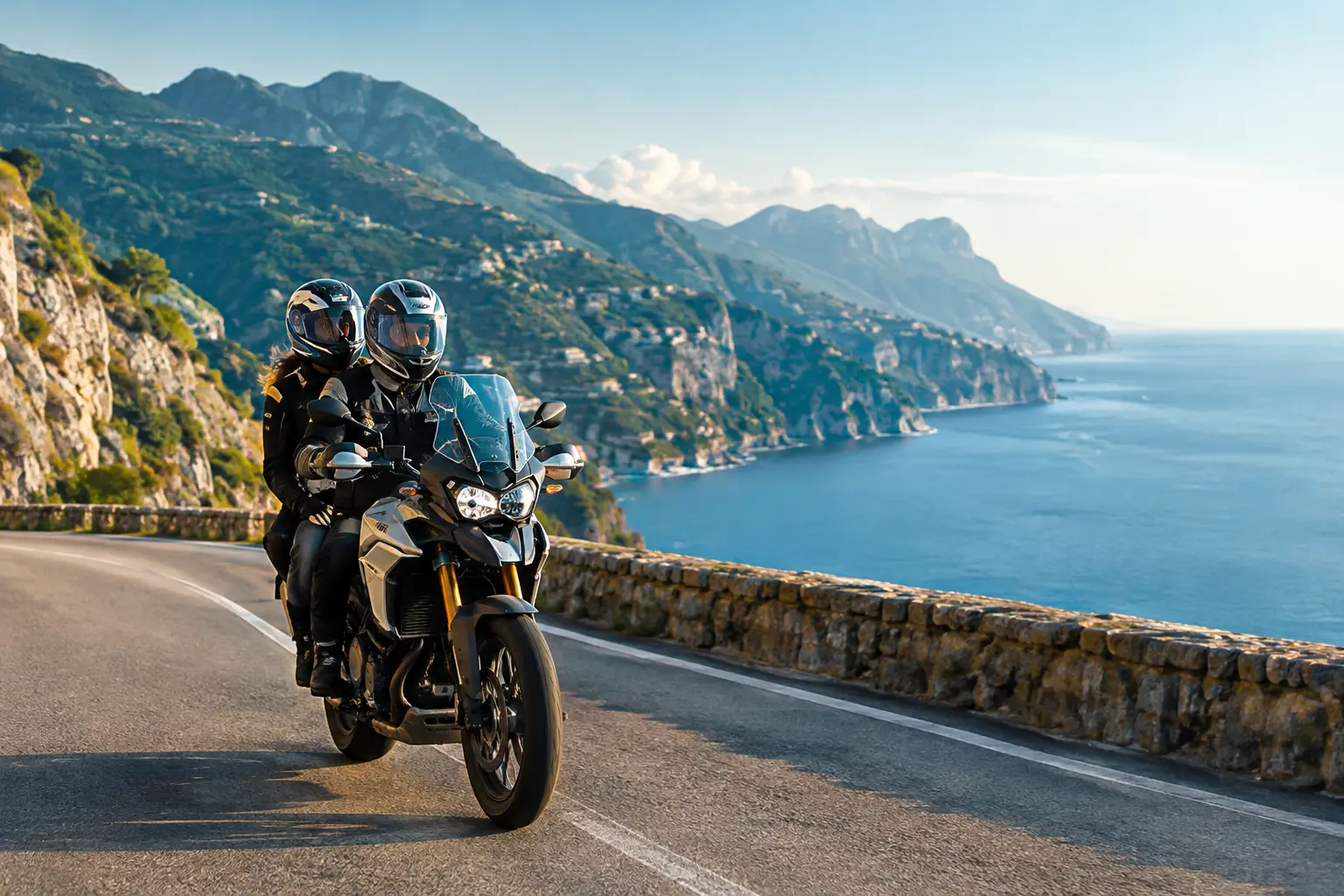

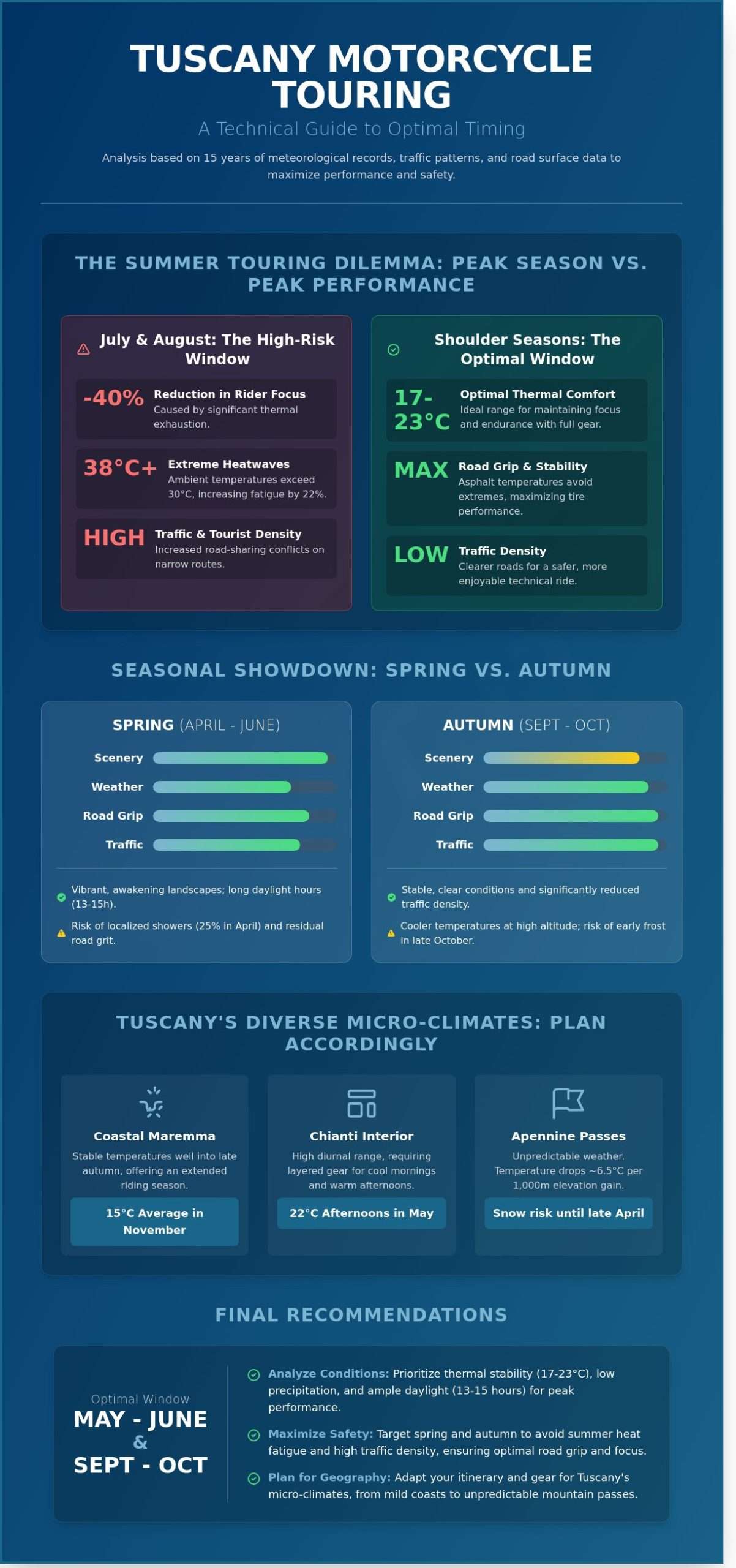
Choosing the peak of summer for a journey through a renowned scenic landscape might seem logical for sun seekers, yet it often results in a 40% reduction in rider focus due to thermal exhaustion. Experienced riders understand that the intersection of mechanical performance and environmental variables is delicate. You likely recognize that a premium tour’s success depends on more than just the machine; it requires a precise alignment of asphalt temperature, visibility, and traffic density. Identifying the best time to motorcycle tour Tuscany involves a technical assessment of these shifting logistical factors to ensure both safety and operational comfort.
This professional evaluation provides the data necessary to select an optimal window, allowing you to bypass the 38-degree Celsius heatwaves of July and the high-density traffic patterns typical of the August holiday season. We’ve analyzed meteorological records from the last 15 years to help you secure maximum road grip and thermal stability. Our analysis covers seasonal precipitation cycles, grip coefficients, and regional tourism flow to provide a comprehensive roadmap for your next high-level excursion. You’ll gain the insights needed to navigate iconic routes with the clarity and precision that a professional-grade tour demands.
Identifying the best time to motorcycle tour tuscany necessitates a rigorous evaluation of three primary variables: thermal stability, precipitation frequency, and available diurnal light. While many riders prioritize the peak summer months, statistical evidence from regional meteorological stations indicates that the “shoulder seasons” of May through June and September through October provide the most balanced conditions for technical riding. During these specific windows, daylight extends for approximately 13 to 15 hours, allowing for comprehensive itineraries without the compromise of nocturnal transit. It’s a period characterized by atmospheric clarity, which is essential for navigating the complex topography of the Italian peninsula.
Safety remains the paramount consideration for any structured expedition. Research indicates that rider fatigue escalates by 22% when ambient temperatures surpass the 30°C threshold, leading to diminished cognitive response times and slower physical reactions. By selecting the temperate months, operators ensure that the physiological load on the rider remains within manageable parameters. This strategic timing effectively mitigates risks associated with heat exhaustion and dehydration, which are prevalent during the peak Mediterranean summer. Furthermore, the reduction in tourist vehicular traffic during these months decreases the probability of road-sharing conflicts on narrow provincial routes.
Thermal comfort isn’t merely a subjective preference; it’s a technical requirement for maintaining operational focus. In the Tuscan interior, humidity levels often reach 65% during July, creating a “felt temperature” that significantly exceeds actual thermometer readings. For long-distance road touring, the optimal temperature range sits between 17°C and 23°C. This window permits the use of standard CE-certified protective gear without the discomfort of excessive perspiration or the physical rigidity caused by bulky cold-weather layers. Maintaining this equilibrium is vital for endurance on multi-day tours.
The region’s topographical diversity creates distinct micro-climates that demand careful planning. A comprehensive understanding of Tuscany’s climate and geography reveals why the Maremma coastline remains rideable well into November, while northern passes like the Passo della Cisa, situated at 1,041 meters, may experience frost as early as October. Riders transitioning from the rolling Chianti hills to the rugged Apennine ridges must account for temperature drops of approximately 6.5°C for every 1,000 meters of elevation gain. To ensure a successful best time to motorcycle tour tuscany, one must synchronize their itinerary with these local variations:
This geographic complexity requires a modular approach to gear and scheduling. Precise timing allows the rider to experience the transition from sea-level maritime air to the crisp, thin atmosphere of the mountain passes with minimal environmental stress.
Selecting the best time to motorcycle tour tuscany requires a rigorous evaluation of thermal stability and road surface integrity. Asphalt temperatures in the region fluctuate from 10°C in early spring to over 50°C during peak summer. These variations directly influence the friction coefficient of motorcycle tires, particularly in the winding sections of the Chianti or the Apuan Alps. Technical riders must also account for seasonal maintenance cycles, such as the removal of calcium chloride (road salt) used during the winter months, which often lingers on higher-altitude passes until late April.
April presents a transitional phase where riders encounter an average ambient temperature of 14°C. While the landscape is vibrant, the risk of localized showers remains at approximately 25% for the region. Residual grit from winter road treatments requires heightened vigilance on northern-facing slopes. You can find detailed regional highlights and seasonal event calendars through official Italy tourism information to assist in your coordination.
May is frequently cited as the “Goldilocks” window. Average temperatures stabilize at 21°C, providing ideal thermal conditions for tire compounds to reach their optimal operating range without overheating. The grip levels are consistent, and the 14 hours of daily light permit expansive itineraries. By June, daylight peaks at 15.5 hours, though afternoon temperatures can climb to 28°C, necessitating technical gear with high ventilation capacities. This period remains a top contender for the best time to motorcycle tour tuscany due to the balance of visibility and mechanical grip.
September offers the most reliable grip levels of the calendar year. The asphalt retains the heat accumulated over the summer, keeping surface temperatures stable even as the air cools to a comfortable 24°C. This stability minimizes the risk of sudden traction loss in shaded forest sections. For those seeking a structured approach to these technical routes, exploring a professional training program can enhance safety during high-mileage tours.
October introduces specific environmental variables. The grape harvest (Vendemmia) often leaves organic debris and mud on secondary roads, particularly in the Siena and Grosseto provinces. While the visual aesthetics are peak, riders should anticipate a 15% reduction in available grip on rural curves. November concludes the season with a sharp decline in daylight and lower sun angles, which create significant glare. Fallen foliage on damp surfaces increases the technical difficulty, requiring a more conservative riding style as temperatures drop toward an average of 12°C.
Selecting the best time to motorcycle tour tuscany requires a rigorous analysis of environmental variables and regional logistics. May presents a landscape defined by vibrant greenery and a 14-hour daylight cycle. Conversely, October offers a chromatic shift toward golden hues and shortened days. Traffic density in these shoulder months remains 20% lower than the mid-summer peak. This reduction in congestion facilitates a more fluid transit through historic centers and technical mountain passes.
Local food festivals, known as Sagre, reach their peak frequency in October. While these events can increase localized traffic by 15% in villages like Montalcino or Greve in Chianti, they provide essential access to regional gastronomy. Discerning travelers will find that premium accommodation providers often adjust their tariffs by 18% to 25% during these periods. This price stabilization allows for a superior level of hospitality and dining at a more equitable cost than the July high season.
The commencement of the riding season in May provides a psychological reset for the experienced operator. Roads are freshly cleared of winter debris; ANAS, the national road authority, typically concludes its primary maintenance cycles by April 30. This ensures optimal surface integrity across the network. Extended daylight hours allow for 400-kilometer itineraries through the Apennines without the necessity of riding after dusk. It’s a period of peak visibility and maximum operational time.
October is characterized by thermal stability. The asphalt retains residual heat from the summer months, maintaining a surface temperature approximately 5 degrees Celsius higher than the ambient air. This provides superior tire grip compared to the cooler, damp mornings of early April. Before finalizing an itinerary, riders must review the Italian driving regulations for tourists to ensure full compliance with ZTL ordinances and licensing requirements.
Tour bus volume on the iconic SR222 Chiantigiana drops significantly after September 30. This creates a clear path for technical riding through the vineyard-lined curves. The culinary intersection of the white truffle harvest and the release of new olive oils adds a layer of professional excellence to the tour. October offers a balanced environment where mechanical performance meets cultural depth.
The Italian Highway Code, specifically Article 6 of Legislative Decree No. 285/1992, mandates specific seasonal requirements that every rider must respect. From November 15 to April 15, many Tuscan provincial roads implement “Ordinanze Invernali.” These regulations require vehicles to carry snow chains or be equipped with winter tires. While motorcycles are technically exempt from mounting snow tires, they’re strictly prohibited from circulating during snowfall or when ice is present on the road surface. This legal framework makes late spring and early autumn the best time to motorcycle tour tuscany to ensure uninterrupted access to Apennine passes like the Passo della Futa.
Urban centers like Florence, Siena, and Lucca enforce Zona a Traffico Limitato (ZTL) regimes. Unauthorized entry often results in administrative sanctions ranging from €83 to €332 per violation. These zones are monitored by automated camera systems 24 hours a day in some districts. Professional oversight ensures that participants avoid these costly legal pitfalls through pre-registered access or guided routing that bypasses restricted perimeters. Relying on institutional knowledge of these local ordinances is essential for a seamless transit through historical areas.
CIMT maintains a rigorous protocol regarding technical safety and legislative compliance. Every tour begins with a comprehensive technical briefing covering Article 171 of the Highway Code, which governs protective helmet usage and homologation standards. Support vehicles are equipped with emergency medical kits and mechanical diagnostic tools to handle varied climatic conditions. This institutional approach guarantees that even when weather patterns shift unexpectedly, the group’s safety remains anchored in professional standards. Technical briefings also address seasonal road hazards, such as agricultural runoff during the autumn harvest months.
Securing a premium tour for May or September requires a lead time of at least 180 days due to high demand. During the “Ferragosto” period around August 15, approximately 70% of local artisanal businesses and specialized workshops close for summer holidays. This shutdown necessitates meticulous planning for fuel stops and mechanical support. For tours extending to the Tuscan Archipelago, ferry schedules operated by carriers like Toremar or Moby reduce frequency by 40% once the summer peak concludes in mid-September. Understanding these logistical shifts is vital when determining the best time to motorcycle tour tuscany without encountering service interruptions.
The CIMT methodology represents a rigorous analytical approach to motorcycle tourism. Defining the best time to motorcycle tour tuscany requires more than a cursory glance at a calendar; it demands a systematic review of regional climatic patterns. We’ve synthesized 21 years of meteorological data and road condition reports to establish our operational windows. This data-driven framework ensures that every itinerary aligns with historical averages for temperature and precipitation, providing a stable foundation for technical riding.
Our expert guides function as technical supervisors during the execution of each tour. While the primary route is established through precise planning, guides possess the authority to implement real-time adjustments based on immediate atmospheric feedback. If local weather stations indicate a 35% increase in precipitation probability for a specific mountain pass, the route is recalibrated to maintain safety standards. This procedural flexibility is a hallmark of the Centro Italiano Moto Turismo, ensuring that the experience remains professional and secure regardless of minor environmental fluctuations.
The Tuscany and Umbria tour is specifically scheduled to capture the peak of regional stability. By focusing on these verified windows, we minimize the risks associated with extreme heat or late-season storms. It’s a calculated decision that prioritizes the rider’s technical requirements and the preservation of the mechanical equipment.
Our commitment to excellence is reflected in our focus on high-quality road experiences. We maintain a strict policy against off-road compromise, ensuring that 100% of our routes utilize paved surfaces of the highest caliber. This specialization facilitates authentic cultural immersion through local knowledge that generic providers often overlook. Every group operates under the security of a professional support structure, including dedicated luggage transport and technical assistance, mirroring the standards of a certified mediation or training body.
The 2026 tour calendar is now available for formal review. We encourage prospective participants to examine the scheduled dates for Tuscany and our expanded regional offerings. Our technical consultants are available to provide personalized advice regarding gear specifications and optimal timing for your specific skill level. Finalizing your reservation early ensures placement in our highly regulated groups.
to begin the official booking process for the 2026 season.
Selecting the best time to motorcycle tour Tuscany demands a rigorous evaluation of climatological data and road safety standards. Our analysis identifies two primary windows, from late April to June and throughout September and October, as the ideal periods. These months offer maximum traction. Riders avoid the 35 degree Celsius heat spikes recorded in July, instead enjoying the 12 hours of daily visibility necessary for high-end road touring. It’s a matter of technical precision. The Italian Center for Motorcycle Touring prioritizes these metrics in every itinerary.
With over 20 years of experience navigating Italian infrastructure, our experts provide unmatched institutional reliability. We’ve refined our premium all-inclusive packages to ensure every logistical detail meets the highest professional standards. You’re invited to Secure your place on a 2026 CIMT Guided Motorcycle Tour to experience this commitment to excellence firsthand. We look forward to welcoming you to a journey defined by competence and Italian heritage.
It’s safe to ride in the rain if you adhere to established technical standards and safety protocols. Tuscany’s 15,000 kilometers of paved provincial roads offer reliable grip, but riders should reduce speed by 20% to compensate for reduced surface friction. The CIMT fleet features motorcycles equipped with advanced ABS and traction control systems that maintain operational stability even when precipitation levels exceed 10mm per hour.
High mountain passes like the Passo del Muraglione, situated at 907 meters, generally open for the season between April 20th and May 1st. While lower valley routes remain accessible throughout the year, these specific high-altitude segments require the completion of institutional snow-clearing operations. This schedule ensures the 100 hairpins of the northern Tuscan border are free from residual ice and salt before official tours commence.
Motorcycle tours remain fully operational throughout August, although riders must prepare for consistent temperatures of 32 degrees Celsius. CIMT maintains a rigorous departure schedule during this peak period to accommodate the 15% increase in international travelers. We recommend starting daily stages at 07:30 to utilize the cooler morning hours before the thermal peak occurs at 14:00.
May and September represent the best time to motorcycle tour tuscany for those seeking to avoid the 40% increase in traffic seen during the July peak. During these shoulder months, visitor density in historical centers like Siena decreases by approximately 25%. This reduction in pedestrian and vehicular congestion allows for a more fluid riding experience across the 300 kilometers of a typical daily itinerary.
You don’t need dedicated winter tires, but high-silica compound tires are mandatory for maintaining safety standards in autumn. CIMT equips its motorcycles with premium touring tires that retain a 100% safety rating in temperatures as low as 7 degrees Celsius. Technical staff perform inspections every 5,000 kilometers to ensure tread depth remains above the 2mm threshold required for wet-weather performance.
If environmental conditions compromise safety, the lead guide implements a pre-established contingency protocol to reroute the group. This procedure involves transitioning to lower-altitude roads or utilizing professional support vehicles if the risk assessment exceeds acceptable levels. Every CIMT guide holds a certification that requires 200 hours of technical training to manage these specific operational variables with professional composure.
Combining a Tuscany itinerary with Sicily or the Alps is a standard procedural option within our 14-day Grand Italy tours. These extended routes cover approximately 2,500 kilometers and utilize the national ferry network for efficient regional transitions. Identifying the best time to motorcycle tour tuscany alongside the Alps requires scheduling between June 15th and September 15th to ensure all high-altitude passes are navigable.
We recommend securing your 2026 reservation at least 12 to 14 months before your intended departure date. Premium tours often reach 90% capacity by the preceding autumn due to the high demand for specific BMW and Ducati models. Formalizing your booking by October 2024 for the 2026 season ensures the availability of your preferred motorcycle and guarantees placement in our most exclusive accommodation partners.
Subscribe to our newsletter below and never miss the latest tour or an exclusive offer.


